I have been urged many times to choose one thing. In my art studies I have heard the same idea in different forms: choose a direction, specialise, narrow things down, focus. The advice rests on an understandable notion that depth comes from long concentration on a single area.
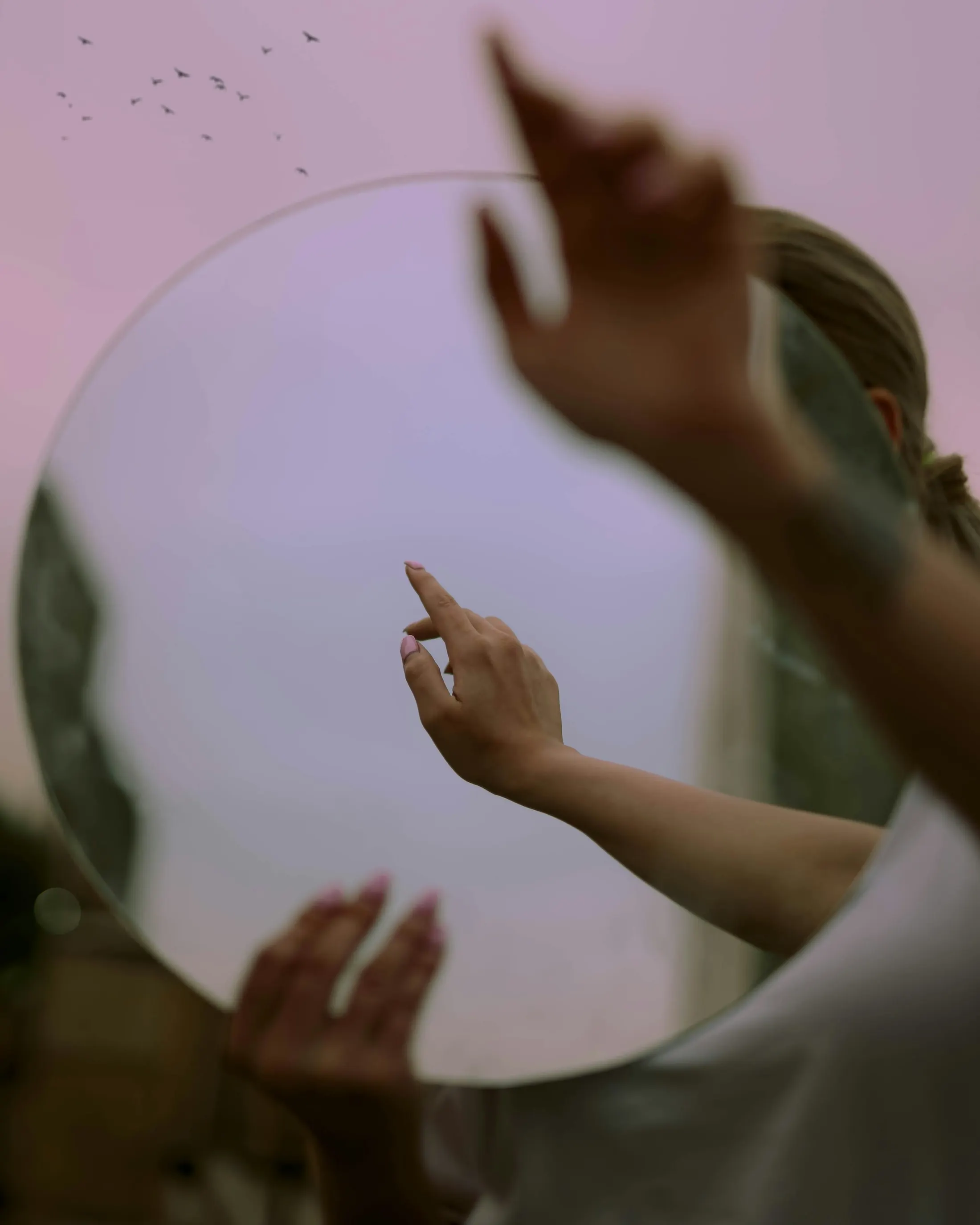
My own way of going deeper is built out of moving between different worlds. I return to the same questions from different roles and notice them changing along the way. I love the idea that a person can put on new lenses and look through them at something they thought they already knew.
I did not come to art from the world of theatre. I came from the countryside and originally thought I would become a special education teacher. I ended up in theatre studies by chance, and from there in circus and later in dance. I am used to stepping into environments whose language I have to learn at first. I recognise a restlessness in myself here, one that pulls me in new directions.
Outside the bubble
I hate ending up in a bubble, and I notice it happening to me surprisingly easily. When my own thinking starts to repeat itself, the same arguments come back and opinions settle into familiar grooves. That is when I deliberately seek out people and environments that shift my point of view. The art field has its own language and its own self-evident truths, and I am very comfortable in that world, but alongside it I also need people who do not know its vocabulary. I need situations where nobody is interested in whether I am a circus artist.
John Dewey placed aesthetic experience within lived life and within a person's relationship to their environment (Dewey, 1934). I recognise something essential in that idea. My artistry is also built in places where nobody around me talks about art. In Pörsänmäki I can sit at the dinner table discussing bear hunting licences and listen to people swearing about the number of permits granted, while in Barcelona I can sink for hours into the world of puppet theatre. Both environments feel natural to me, even though their language and their interests are different.
The same curiosity draws me towards people. I can sit at a table where the left is criticised in harsh words and become interested in the experiences behind those thoughts. A little later I can be messaging with a vegan I love about the ethical questions of eating meat. I am interested in how people build a world that makes sense to them out of such different starting points.
Polyphony
Mikhail Bakhtin's idea of polyphony touches on something here that I love. In his thinking about literature, different consciousnesses can keep their own voice without one voice enclosing the others inside its own explanation (Bakhtin, 1984). I am drawn to a world where contradictory voices are allowed to stand side by side and to make each other more precise. I also admire artists whose imagination carries so far that they can convincingly build many voices without having personal experience of everything they depict. My own imagination needs a lot of friction from the outside world, and it does me good to end up in a place where my own way of ordering reality wobbles.
Roles change the lens
Work environments, too, can change the lens powerfully. At Sujo out in the countryside the roles leak into each other. When the stage is an old manure cellar, practical problems get solved alongside the artistic work, and sometimes you have to empty the outhouse. Thoughts well up while shovelling shit. At Cirque du Soleil the structure is a different one: a large organisation is hierarchical and the tasks are precisely bounded. I work there as a customer service worker and a cleaner, and I am met through those tasks.
As a cleaner I can be almost invisible, whereas in customer service a person's expectation of how they ought to be treated comes out within a few seconds. Some people are astonishingly rude to someone doing service work, others warm and genuinely grateful for even the smallest help. Erving Goffman looked at social life as a series of situations in which a person's behaviour takes shape in relation to the environment and to other people (Goffman, 1959). When I get to slip between different roles, this becomes concrete. As an artist I can be expected to have a vision, as a customer service worker to help, and as a cleaner I can turn, in someone's gaze, into almost part of the building.
I sometimes think about the person who cleans the sewer network of Helsinki. The work is physical, dirty and invisible to most of the city, but precision and professional pride can build up inside it. I am interested in the idea of a person who can build meaning even into a place that the surrounding culture has not already named as interesting.
Vocation and meaning
There is a lot of talk around art about passion and vocation. At the same time, a vast part of people's lives takes place in environments that few would describe as their vocation. A person can still relate to what they do in a way that makes it their own. I find something far more interesting in that than in the idea that a meaningful life should be built only around the things we are already passionate about.
The therapist’s gaze
My dance movement therapy studies are one new lens among others. They place me in a new kind of relationship with another person and they bring professional ethics and responsibility with them. In the position of a therapist it matters how I use power and how I meet another person's boundaries. This interests me as a director too, because a director steers the work and decides what gets space. The therapist's work has made me more precise about how subtly power can live in expectations and in who gets to determine the direction of a situation.
Perhaps what one specialises in can be a question rather than a medium or a job title. I am interested in the human being in relation to another human being, in the effect of social position on an encounter, and in the responsibility for how the other person comes to be seen. These questions survive the move from the stage to the stairwell and from a rural dinner table to the therapy room.
New lenses
When I notice my own thinking going round the same track, I long for something that will mess it up. Sometimes a book does it, sometimes a person whose political opinion makes my first reaction: what the hell. Then I want to know what the world looks like from where they stand and what their lens magnifies. Another voice can be let in alongside your own without any need to merge the two into one.
I am first and foremost an artist, and I want to develop my own artistic practice over a long time. My own way of going deep contains a lot of sideways movement. The therapist's gaze brings a new ethical dimension to it, because a gaze, an interpretation and a position have consequences.
I need tables where my own thinking is put to work, and jobs where people look at me through a different social role. I need new lenses that make the familiar world strange for a moment.
Sources
Bakhtin, M. M. (1984). Problems of Dostoevsky’s Poetics. University of Minnesota Press.
Dewey, J. (1934). Art as Experience. Minton, Balch & Company.
Goffman, E. (1959). The Presentation of Self in Everyday Life. Doubleday.